
Power Plants
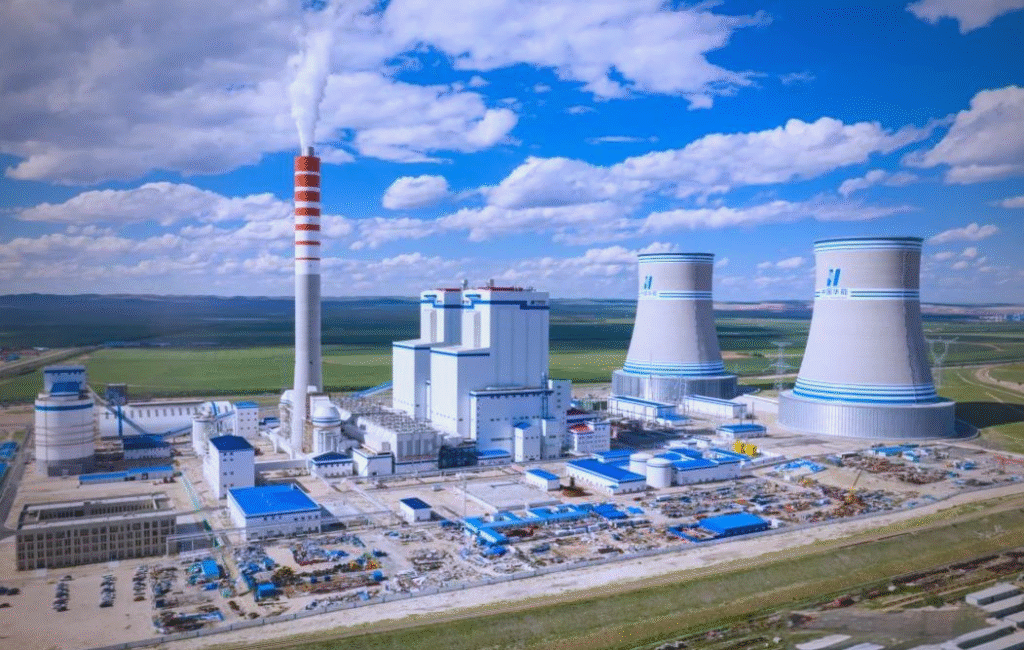
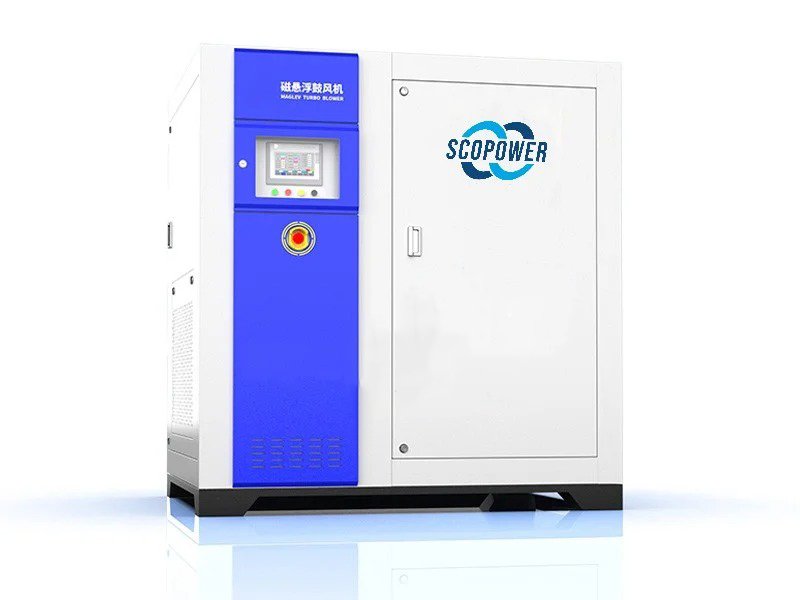
The application of magnetic levitation (maglev) fans in power plants represents a crucial energy-saving and efficiency-enhancing technology upgrade. These systems primarily replace traditional Roots blowers or multistage centrifugal blowers, delivering superior performance in specific auxiliary processes.
Core Application Scenarios
Maglev fans are not typically used in primary power plant processes (such as boiler forced draft systems), but rather in auxiliary systems. Their core applications include the following:
1. Flue Gas Desulfurization (FGD) System
Application Location: Oxidation Blower
Purpose: In the wet flue gas desulfurization process, limestone slurry absorbs SO₂ to produce calcium sulfite. Air is blown into the aeration tank at the bottom of the absorption tower to oxidize the sulfite into stable calcium sulfate (gypsum). This process requires a large and stable air supply from the blower.
Traditional Pain Points: Conventional Roots blowers, commonly used in this process, consume large amounts of power—typically 20%–30% of the total electricity used in the FGD system. They also produce excessive noise and require frequent maintenance of lubricants and gears.
2. Pneumatic Ash Conveying System
Application: Replacement for conveying fans or air compressors
Purpose: Used to transport fly ash from dust collector hoppers to the ash silo. While air compressors are the conventional choice, maglev blowers can serve as efficient air sources in low-to-medium flow rate applications, offering higher energy efficiency and reliability.
3. Other Compressed Air Applications
Maglev blowers can also provide clean air for instruments or other processes requiring oil-free air, with customized pressure and flow specifications to meet operational requirements.

Application Benefits and Results
The adoption of maglev blowers in these systems yields revolutionary improvements, particularly in energy efficiency, reliability, and environmental performance.
1. Significant Energy Savings and Consumption Reduction (Core Advantage)
Typical Energy Savings: 20%–35% reduction in power consumption in oxidation and aeration systems.
Key Reasons:
High-Efficiency Impeller: Advanced centrifugal impeller design provides substantially higher efficiency than Roots blowers.
Zero Mechanical Loss: The maglev bearing system eliminates friction and mechanical losses, converting nearly all input energy into useful work.
Precise Frequency Control: Integration with the DCS system enables real-time adjustment of speed and airflow based on process signals (such as slurry pH or DO levels), ensuring “on-demand air supply.” In contrast, Roots blowers usually run at constant speed with throttling control, resulting in energy waste.
Case Study Example:
A 250 kW oxidation blower operating 8,000 hours per year at 0.65 CNY/kWh results in annual electricity costs of:
250 kW × 8,000 h × 0.65 CNY = 1.3 million CNY
With a 30% reduction in energy use, annual savings are approximately 390,000 CNY.
A typical maglev blower system costs around 1 million CNY, achieving a payback period of 2–3 years.
2. Reduced Operation and Maintenance Costs
No Mechanical Maintenance: No oil, filters, gears, or belts—significantly reducing maintenance materials and labor.
Long Lifespan & High Reliability: The wear-free bearing design and minimal mechanical contact ensure low failure rates and high system uptime.
3. Substantial Noise Reduction
Maglev blowers operate below 80 dB, while traditional Roots blowers typically exceed 100 dB.
This improves the working environment and helps facilities meet noise and environmental compliance standards.
4. Precise Control and Enhanced System Stability
Rapid Dynamic Response: Speed adjustments occur within milliseconds, maintaining stable oxidation or aeration conditions even under fluctuating loads.
Smart Connectivity: Supports IoT-based remote monitoring, with real-time data on pressure, flow, temperature, and energy consumption—enabling predictive maintenance and unmanned operation.
5. Clean, Oil-Free Air Supply
The maglev blower delivers 100% oil-free air, eliminating contamination risks in FGD slurry or wastewater treatment systems—critical for protecting catalysts and ensuring process safety.
Example: Huaneng Group Case
In a 600 MW thermal power unit, Huaneng Group replaced two conventional 220 kW Roots oxidation blowers with a single variable-capacity maglev blower.
Results:
Energy savings: 31%
Electricity reduction: >1 million kWh annually
Cost savings: ≈700,000 CNY per year
Conclusion
For power plants, maglev blowers represent an ideal solution for energy-saving retrofits in auxiliary systems, particularly flue gas desulfurization and oxidation. Although initial investment is higher, the substantial energy savings, low maintenance, and improved automation deliver a rapid return on investment.
As China advances its “dual carbon” (carbon peaking and neutrality) goals, the adoption of maglev fans in the power generation sector is expected to expand rapidly—driving the industry toward higher efficiency, intelligence, and environmental sustainability.