Papermaking
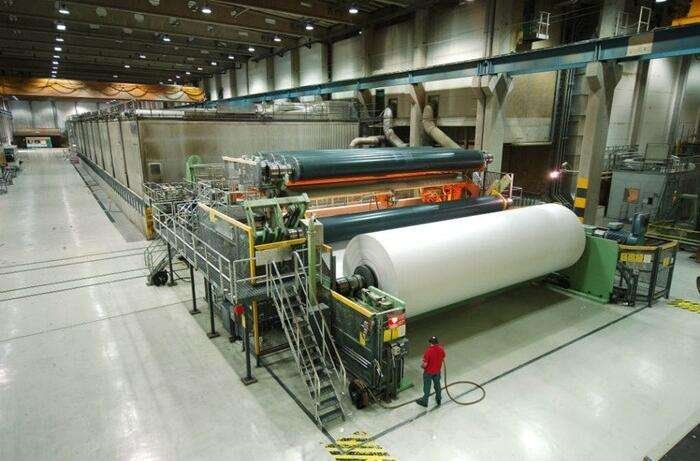
Papermaking is fundamentally a dewatering process. The pulp — typically consisting of about 99.5% water and 0.5% fiber and filler — passes through the papermaking machine and is ultimately transformed into a paper roll with a final moisture content of around 5–8%.
The wire section and press section are the key components responsible for removing the majority of this moisture.
Limitations of Traditional Vacuum Systems
In conventional papermaking machines, vacuum systems provide the suction required in the wire section (suction boxes and couch rolls) and the press section (felt dewatering). These systems mainly rely on liquid ring vacuum pumps and Roots vacuum pumps.
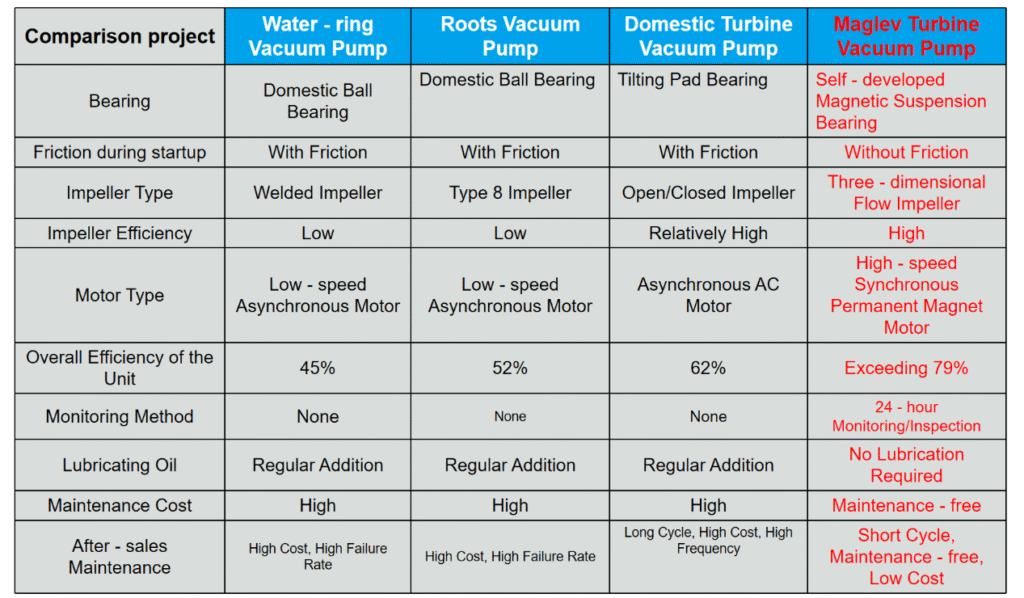
Liquid ring vacuum pumps require a working fluid — usually water — and have low efficiency (30–50%), as much of the energy is lost in compressing and agitating the working fluid.
Roots vacuum pumps generally operate in multiple stages, resulting in high noise levels, high energy consumption, and frequent maintenance requirements.
Traditional turbine vacuum pumps also suffer from low energy efficiency, high maintenance costs, and frequent downtime.

The Maglev Vacuum Pump Advantage
Magnetic levitation (maglev) vacuum pumps overcome these challenges.
They are highly energy-efficient, quiet, and most importantly, deliver stable and reliable performance, effectively preventing issues such as paper breaks and production interruptions.
A performance comparison is shown below: