
Applications
Witness the power of change
Home>Applications>Textile industry
Maglev Air Compressor: A Green Solution for Energy and Cost Savings in the Textile Industry
In textile manufacturing, compressed air acts as the essential “power engine.” From yarn splicing on automatic winders to weft insertion in air-jet looms and yarn texturing in DTY equipment, stable, efficient, and clean compressed air is fundamental to product quality and overall production efficiency.
However, industrial air compressors are frequently among the top energy consumers in a plant. Traditional screw compressors often lead to excessive energy costs and persistent oil contamination risks—presenting two major barriers for manufacturers aiming for green transformation and significant cost optimization.
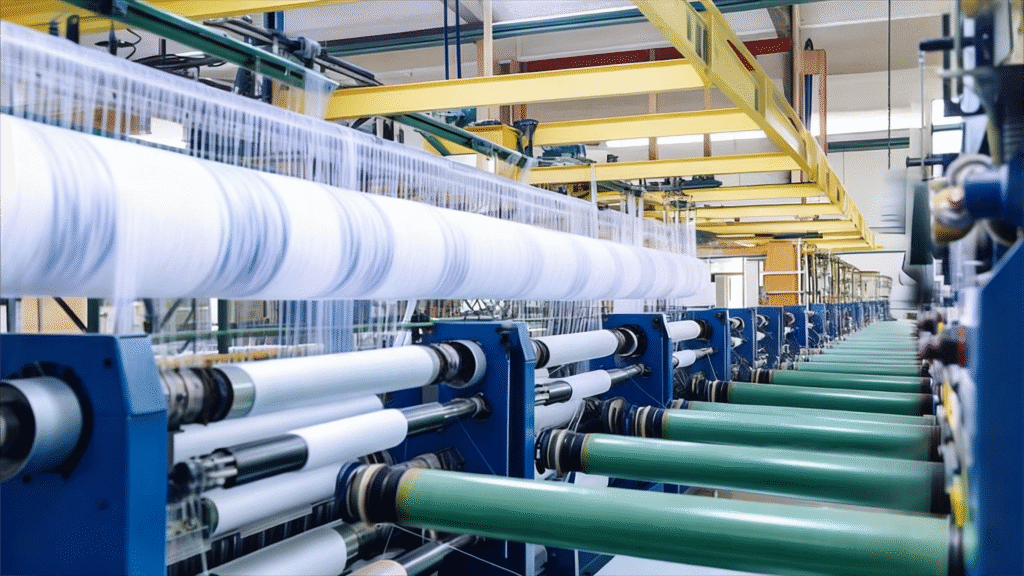
Core Industry Challenges: High Energy Consumption and Oil Contamination
Energy expenses in textile factories are typically second only to raw material costs. Conventional screw compressors suffer from inherent inefficiencies like mechanical friction, transmission losses, and wasteful unloading operations, all contributing to substantial electricity waste.
The issue of oil contamination is equally critical. In standard oil-lubricated systems, oil vapors can enter the compressed air stream, leading to clogged air-jet nozzles, damaged precision valves, fabric appearance defects, and increased downstream rework costs.
Maglev Technology: The Dual-Solution for Peak Efficiency and Purity
Maglev air compressors (or magnetic levitation air compressors) integrate cutting-edge magnetic bearings with high-speed permanent magnet motors. This advanced engineering provides a transformative answer to both energy consumption and air quality challenges.
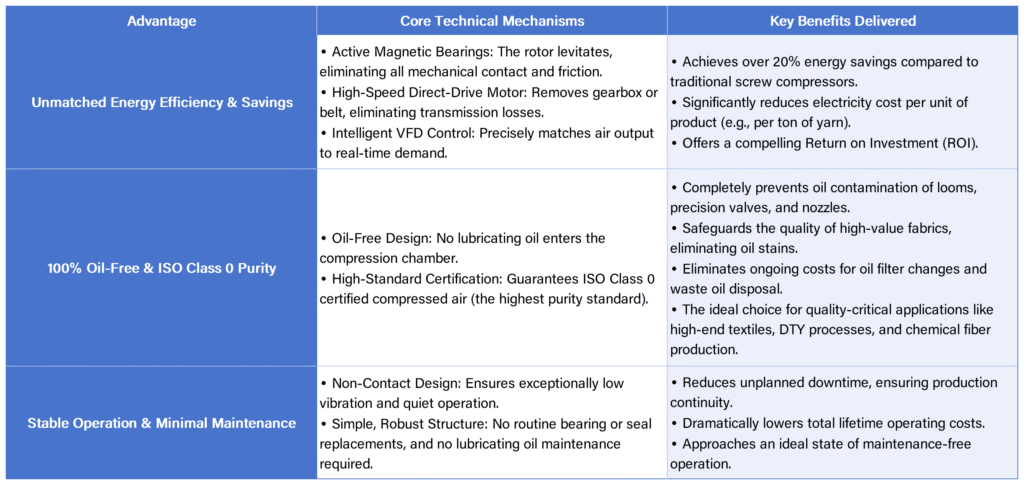
Real-World Validation: A Case Study in Reliability and Savings
A major textile manufacturer in Eastern China sought to reduce compressed air energy cost and solve oil contamination issues. They upgraded their DTY workshop by replacing aging screw compressors with modern maglev units. The results were clear:
Energy consumption decreased by 21.2%, delivering substantial annual savings.
Mechanical maintenance costs dropped to nearly zero, saving over $1,500 per compressor per year.
The consistent oil-free air quality improved overall product consistency, reducing rejects and safeguarding equipment.