
Steel and Metallurgy
Case Study: Aluminum Electrolysis Flue Gas Purification System
Maglev blowers have been widely adopted in the smelting industry, with aluminum electrolysis serving as one of the most representative examples of successful energy conservation and emission reduction. These blowers primarily replace traditional Roots blowers in electrolytic cell flue gas purification and collection systems, delivering remarkable energy-saving and operational results.
Application: Electrolytic Cell Flue Gas Purification System
During aluminum electrolysis, high-temperature electrolytic reactions generate large volumes of harmful flue gas containing fluorides, asphalt volatiles, and dust. This flue gas must be captured under strong negative pressure and sent to a dry purification system—typically using alumina as an adsorbent—for treatment to ensure emissions meet environmental standards.
The core power equipment for this suction system is the high-pressure blower, which must:
Provide stable negative pressure to prevent flue gas leakage and maintain a safe, clean workshop environment.
Deliver sufficient airflow to transport all collected flue gas to the purification unit.
Traditionally, Roots blowers have been used for this purpose. However, they exhibit low efficiency, high energy consumption, excessive noise, and frequent maintenance requirements.
Advantages of Maglev Blowers
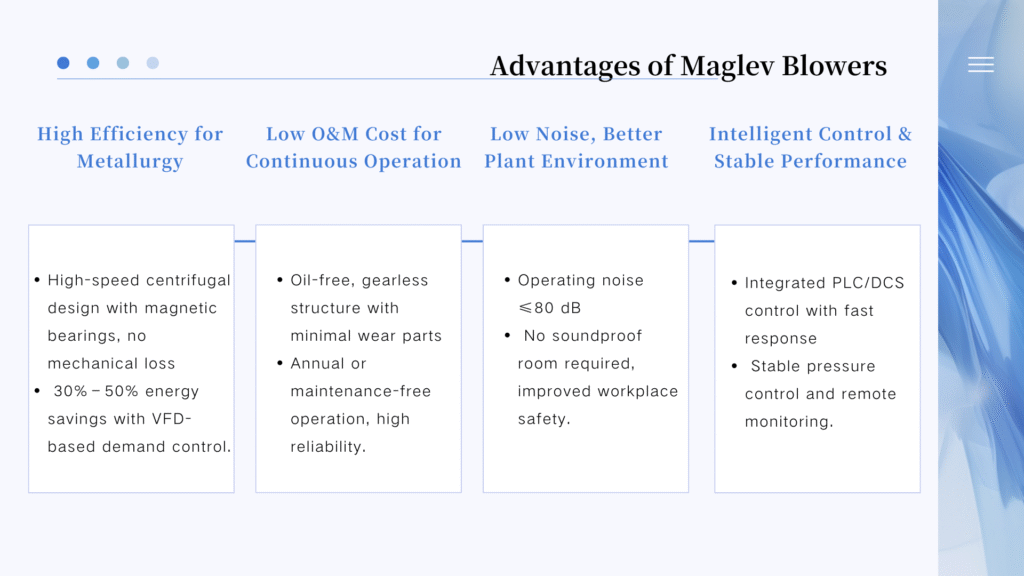
Maglev blowers, powered by advanced magnetic bearing and high-speed motor technology, address the inherent limitations of traditional blowers and deliver comprehensive performance improvements.
Example Calculation:
A 500,000-ton-per-year electrolytic aluminum plant may operate purification system fans with a total installed power exceeding 10,000 kW.
A 30% reduction in power consumption translates into annual electricity savings of approximately RMB 14.4 million (based on 0.6 RMB/kWh and 8,000 operating hours):
10,000 kW × 30% × 8,000 h × 0.6 RMB/kWh ≈ RMB 14.4 million
The typical payback period is 1–3 years.

Application Case
Xinfa Group, a leading aluminum producer, replaced several traditional purification fans with high-efficiency maglev blowers. The retrofit achieved average energy savings exceeding 35%, cutting annual power costs by hundreds of millions of yuan and playing a crucial role in the company’s “dual-carbon” energy transition strategy.
For energy-intensive industries such as smelting, maglev blowers represent far more than an equipment upgrade—they embody a transformative energy-efficiency technology advancement. By directly addressing one of the highest energy consumption points in the production process, maglev blowers deliver substantial economic, environmental, and social benefits, making them a key enabler for cost reduction and carbon emission mitigation in the modern smelting industry.